David Packard
David Packard co-founded Hewlett-Packard with Bill Hewlett in 1939. The two had met at Stanford, where professor Fred Terman encouraged their interest in building a business. Packard worked at General Electric before returning to Palo Alto. Their first workshop was a rented garage, and their initial resources amounted to $538. Hewlett’s audio oscillator design gave the partnership a useful product; a modified version found an early customer in Walt Disney Studios. Packard became president when the business incorporated in 1947, then chairman and chief executive in 1964. HP grew from electronic instruments into a much broader technology company. Its approach to management became part of its influence. The company archives describe founders who stayed close to daily work while giving staff room to investigate ideas and take responsibility. Visits to facilities included informal talks with employees, a practice associated with management by walking around. In a 1993 company interview, Packard explained that attracting engineers had been an early goal, but experience taught him to include every employee in the company’s progress. He also warned against becoming a copy of competitors. His account paired concern for people with the need to contribute useful technology and keep decisions close to those who understood the work. Packard left HP in 1969 to serve as U.S. deputy secretary of defense. He left government in 1971 and resumed HP’s chairmanship in 1972. He retired as chairman in 1993. With Lucile Packard, he also built a foundation and helped establish the Monterey Bay Aquarium. His book The HP Way records his view of the founding partnership and its operating principles. It offers a founder’s account of how purpose, people and technical work can stay connected as a company grows.
Which books are linked to David Packard?
These are examples from the documented shelf. Each label describes the connection; a book on the shelf is not always a recommendation.
- The World Book Encyclopedia by World Book, Inc. — Childhood study in his own account. Source
Contents
Career highlights
- 1939Forms the Hewlett-Packard partnership with Bill Hewlett in Palo Alto.
- 1947Becomes president when Hewlett-Packard incorporates.
- 1964Becomes chairman and chief executive; David and Lucile Packard also establish their foundation.
- 1969Leaves HP to serve as U.S. deputy secretary of defense.
- 1972Resumes HP chairmanship after leaving government in 1971.
- 1993Retires as chairman after more than five decades with the company.
- 1995Publishes The HP Way, his account of the company and its approach to management.
Lessons for founders
- Start with a product that does useful work. The oscillator was a practical instrument, and Disney became an early customer for a modified model. Ask what specific task your first product makes easier and who needs it now.
- Let people closest to a problem make decisions. Packard’s 1993 interview argues for decisions at the lowest suitable level. Check whether approval steps add knowledge or only delay people who already know the work.
- Share progress across the whole team. Packard described moving from concern for engineers to a bonus plan for all employees, then profit sharing as HP grew. Make sure the people who produce results can take part in them.
- Make a contribution customers can distinguish. Packard said HP sought useful technical contributions instead of copying competitors. Describe the customer benefit of a proposed product before adding another project to the plan.
- Walk through the work and listen. HP’s archive records site visits that included informal talks with staff. Use direct contact to find misunderstandings and learn what reports leave out.
- Give skilled people room to investigate. The company archive describes freedom for scientists to explore ideas. Set a clear purpose and let skilled staff test approaches within it, instead of prescribing every move.
On the Founders podcast
2×Read about them
3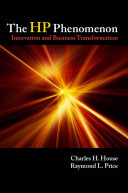
In their own words
1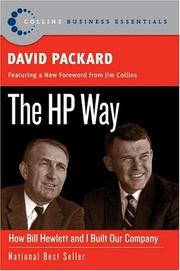
Books on their shelf
1
Sources
13
- David Packard — 1912–1996 — Agilent Technologies
- Our founding and the friendship that started it all — Hewlett Packard Enterprise
- David Packard — Stanford School of Engineering
- The end of an era — Packard interview with Jay Coleman — Hewlett-Packard, Measure magazine, November–December 1993
- Management by Walking Around Continues — Hewlett-Packard Company Archives
- The HP Way: Corporate Culture — Hewlett-Packard Company Archives
- The HP Way — publisher description, contents and authorized excerpt — HarperCollins, reproduced by eCampus
- The HP Way — 1995 bibliographic record — HarperBusiness / Google Books
- Bill Hewlett’s letter — Packard’s planned return — Hewlett-Packard, Measure magazine, January 1972
- Packard returns to HP — Hewlett-Packard, Measure magazine, February 1972
- The HP Phenomenon: Innovation and Business Transformation — History of the company Packard co-founded
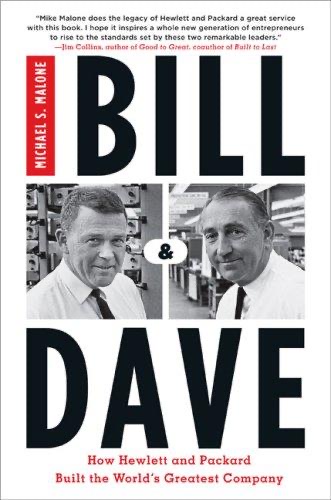
- Bill & Dave: How Hewlett and Packard Built the World’s Greatest Company — Joint biography of Hewlett and Packard
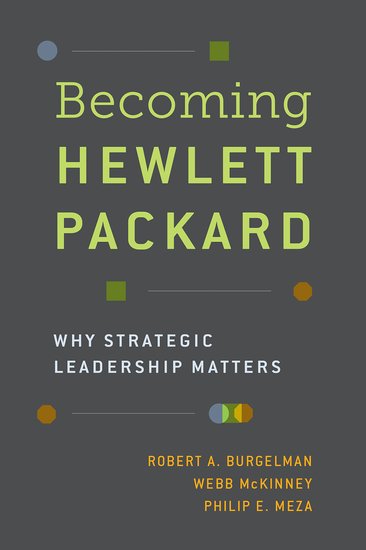
- becoming-hewlett-packard-why-strategic-leadership-matters-robert-a-burgelman-webb-mckinney-and-philip-e-meza — Company history with a substantive founders’ chapter