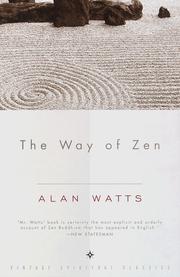
- Steve Jobs — On Daniel Kottke's list of books he and Jobs read together 1972–74, presented at the 2015 Dent Conference source ↗
Alan Watts's classic introduction to Zen Buddhism traces the philosophy from its roots in Indian and Chinese thought through its Japanese expression, emphasising Zen as a practice of direct perception rather than intellectual understanding. The book argues that Zen is not a system of beliefs but a way of seeing things as they are, without the filtering apparatus of concepts, language, and the separate self.
The Way of Zen is the most accessible entry point into the cluster of Eastern texts that shaped Jobs's product philosophy at Reed. Watts's central claim — that Zen is about direct, unmediated perception rather than conceptual understanding — translates directly into Jobs's design methodology: the user should not have to think about the interface; the product should be graspable through intuition alone. This is not an aesthetic preference but an epistemological position: the best design Make the Thing Disappear, because conceptual overhead is the enemy of direct experience.
Job read this on Daniel Kottke's list alongside Cutting Through Spiritual Materialism and the Dhammapada, and it belongs to a group of books that taught him to trust sensory and intuitive intelligence over analytical reasoning. For founders, Watts offers a framework for evaluating products and decisions by whether they invite direct engagement or demand explanation — and the latter, in this view, is always a design failure.