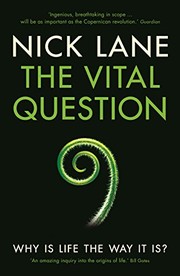
- Bill Gates: "This biology book blew me away. A compelling case for how energy made us who we are." source ↗
Nick Lane's 2015 book (Profile; Norton in the US, 2016) argues that energy constraints explain life's deep structure: why complex cells arose only once in four billion years, why all complex life shares aging and two sexes, and why mitochondria — acquired through a single ancient endosymbiosis — made it all possible. Lane is a biochemist at University College London.
"This biology book blew me away. A compelling case for how energy made us who we are," Gates writes — and the depth of his reaction matters: he read it, ordered Lane's three other books, read two of them, and arranged to meet Lane in New York. The mechanism that convinced him is a constraint story. Bacteria generate energy across their outer membrane, and because volume grows faster than surface area, they hit a hard ceiling on size and complexity. One improbable event — a bacterium surviving inside an archaeon — produced mitochondria, internalized power generation, and removed the ceiling. Everything complex followed.
That is a founder's framework in biological form: find the binding constraint, because removing it re-rates the entire system. The book is also worth reading as a model of intellectual conduct — Gates notes that Lane is always clear about where he is citing others' work and where he is extending his own, and that "he would be the first to tell you that some of his ideas might be wrong." Grand theory with epistemic discipline is the combination this library's readers should be shopping for.