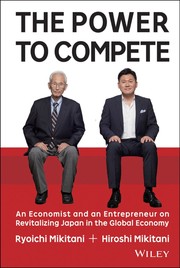
- Bill Gates: "The Power to Compete has smart ideas about revitalizing Japan’s economy." source ↗
A 2014 dialogue between father and son: Ryiochi Mikitani, a former Japanese finance ministry official and economist, and Hiroshi Mikitani, founder and CEO of Rakuten, Japan's largest e-commerce company. The book takes the form of a debate about what went wrong with Japan's economy after its 1990s bubble collapsed and what would fix it — the father arguing from inside the establishment, the son arguing as an entrepreneur who built a business despite the system his father helped create.
Gates called it "smart ideas about revitalizing Japan's economy." For a founder, the format itself is the first lesson: a father who worked inside the system and a son who disrupted it, arguing on the page about whose diagnosis is right. Hiroshi Mikitani's argument is that Japan's decline is cultural and institutional — lifelong employment, consensus decision-making, and risk aversion created an economy that cannot reallocate capital or talent to growing sectors.
The father-son structure makes visible a tension that every founder faces: the incumbents built the rules, the insurgent must break them to win, and both sides have valid arguments. Hiroshi's specific prescriptions — English as Rakuten's internal language, aggressive M&A, performance-based pay — are concrete examples of a founder imposing Silicon Valley norms on a Tokyo corporate culture. A founder scaling internationally, especially into or out of Asia, will recognise the cultural fault lines Mikitani is navigating.