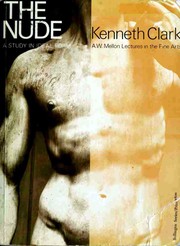
- Paul Graham: "Reading The Nude is like a ride in a Ferrari." source ↗
Kenneth Clark's 1956 study of the nude in Western art, tracing how the human body has been idealized, abstracted, eroticized, and subverted from ancient Greece through modernism. Clark distinguishes the nude (a balanced, idealized form that is a work of art) from the naked (the actual, unclothed human body), and uses that distinction to explore how artists translate physical reality into aesthetic perfection. The book ranges across sculpture, painting, and drawing, from the Apollo Belvedere to Matisse, with Clark's characteristic density of insight — every page carries an idea that other scholars would stretch to a chapter.
Graham's praise for Clark in 'Some Heroes' is his most exuberant: 'Reading The Nude is like a ride in a Ferrari. Just as you're getting settled, you're slammed back in your seat by the acceleration. Before you can adjust, you're thrown sideways as the car screeches into the first turn. His brain throws off ideas almost too fast to grasp them.' Clark is, for Graham, 'the best nonfiction writer I know of, on any subject.'
For a founder, the book's value is not in art history but in showing what a mind operating at full power looks like when it has mastered a domain so thoroughly that connections and patterns pour out faster than the reader can absorb them. Clark's ability to synthesize across 2,500 years of visual culture into a coherent argument about ideal form is a model for how a founder should understand their own industry: not as a list of facts but as a living system of relationships, causes, and consequences. Clark's method — find the tension (nude vs. naked) and use it to organize everything — is directly transferable to product strategy.