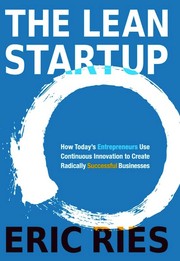
- Marc Andreessen: "The Innovator's Dilemma, The Lean Startup and Zero to One are the defining trilogy of intellectual thought on the art and science of modern technology startups. Virtually every page of each is open to debate, and yet, as a whole, they provide intellectual scaffolding for our endeavours that I wish had existed when I started in 1994." source ↗
Eric Ries's 2011 book codified the methodology that became the standard operating system for modern technology startups. Drawing on his experience at IMVU and on lean manufacturing principles, Ries argues that startups should not build products in isolation and then test them, but should instead cycle through "build-measure-learn" loops with a Minimum Viable Product, using validated learning to decide whether to persevere or pivot. The book introduced concepts — MVP, pivoting, split testing, actionable versus vanity metrics — that reshaped how an entire generation of founders build companies.
Andreessen called The Lean Startup one third of "the defining trilogy of intellectual thought on the art and science of modern technology startups," alongside The Innovator's Dilemma and Zero to One. His key framing: "Virtually every page of each is open to debate, and yet, as a whole, they provide intellectual scaffolding for our endeavours that I wish had existed when I started in 1994." That sentence itself is the most important comment — Andreessen, who built Netscape without any playbook, is saying the methodology matters as scaffolding, not as dogma.
For a founder, the core is the build-measure-learn loop as a discipline. The MVP is not about shipping crap — it is about maximizing learning per unit of effort. The pivot is not a failure — it is a strategy change based on real data. The book argues that most startup waste comes from building things nobody wants, not from failing to execute. The split-testing mentality — running experiments, measuring outcomes, deciding on evidence rather than opinion — is the single concept a founder should internalize above all others. That said, Andreessen's "open to debate" note is crucial: Lean Startup works best where learning cycles are fast. Deep tech, infrastructure, and regulated markets cannot iterate as quickly, and forcing the methodology there can be harmful. Adopt the experimental mindset while understanding its limits.