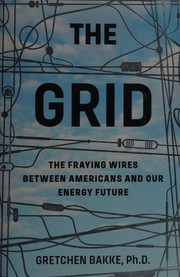
- Bill Gates: "This book, about our aging electrical grid, fits in one of my favorite genres: “Books About Mundane Stuff That Are Actually Fascinating.” Part of the reason I find this topic fascinating is because my first job, in high school, was writing software for the entity that controls the power grid in the Northwest. But even if you have never given a moment’s thought to how electricity reaches your outlets, I think this book would convince you that the electrical grid is one of the greatest engineering wonders of the modern world. I think you would also come to see why modernizing the grid is so complex and so critical for building our clean-energy future." source ↗
Gretchen Bakke's 2016 cultural and technical history of the North American electrical grid, from Edison's Pearl Street station through the 2003 blackout to the challenges of integrating renewable energy. Bakke, an anthropologist, treats the grid as a relic of early-twentieth-century engineering — designed for centralised, one-way power flow with almost no storage — that must now accommodate distributed solar, electric vehicles, and variable wind without the benefit of modern control systems or a coherent regulatory framework.
Gates wrote that it "fits in one of my favorite genres: 'Books About Mundane Stuff That Are Actually Fascinating'" and called the grid "one of the greatest engineering wonders of the modern world." For a founder in energy storage, electric vehicles, grid software, or climate tech, this book maps the legacy infrastructure they are trying to disrupt.
Bakke's key insight is that the grid's brittleness is not a technical problem awaiting a better battery; it is an institutional problem created by a century of regulatory fragmentation, utility monopolies, and a rate-making structure that rewards building more infrastructure rather than operating it efficiently. A founder who understands this knows that the hardest part of selling grid solutions is not the engineering — it is finding a buyer in a system designed to resist change. The grid's problems are less technological than procedural, and Bakke shows exactly which procedures stand in the way.