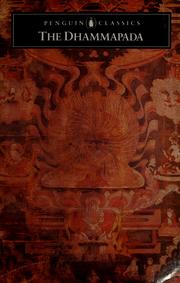
- Steve Jobs — On Daniel Kottke's list of books he and Jobs read together 1972–74, presented at the 2015 Dent Conference source ↗
The Dhammapada is a collection of the Buddha's sayings on the nature of mind, action, and the path to liberation, organised around the concept of skillfulness (kusala) — the idea that thoughts and actions can be trained like any craft. In Mascaró's translation, the verses emphasise direct personal experience over doctrine and the primacy of one's own mind in shaping one's reality.
The Dhammapada's organising principle — skillfulness — treats mental states and actions as something you can get better at through practice, not as fixed traits or moral absolutes. This vocational framing of inner life is what connected it to Jobs: a product is a product, and a decision is a decision, and both can be done with more or less skill. The book's verses on the mind's primacy — 'What we are today comes from our thoughts of yesterday' — reinforce the idea that the quality of attention a founder brings to their work determines the quality of the output, and that this attention can be cultivated.
Jobs read Mascaró's translation as part of the Kottke reading group, and it belongs to the same stream as Zen Mind, Beginner's Mind and Cutting Through Spiritual Materialism. For founders, the Dhammapada's emphasis on skillfulness rather than virtue is the important framing: it is not a religious text but a manual for training perception and action, relevant whenever the question is 'how do I get better at this?' rather than 'is this right or wrong?'