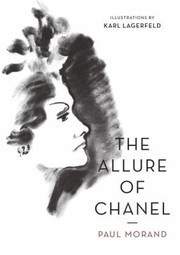
Chanel's own account of her life, dictated to novelist Paul Morand during a series of 1945 conversations in St Moritz. The manuscript sat in a drawer and was not published until 1976. It covers her childhood at Aubazine, her rise from seamstress to couturière, her relationships with Capel, Stravinsky, and the Duke of Westminster, and her philosophy of fashion and womanhood. It is as close to Chanel's own voice as the record gets — and also the least reliable narrator of her own life.
This is the primary-source counterpart to every biography on Chanel's shelf: her own story, told in her own words, to a novelist who transcribed rather than interrogated. For founders, the value is in seeing how a founder constructs her own origin myth — what she emphasizes, what she omits, and how she wants to be remembered. Chanel shaved years off her age, turned the Aubazine orphanage into 'a stay with two maiden aunts,' and wrote her father out of the story as an adventurer who sailed to America, all of which the documentary record contradicts.
Morand's book is the original version of what became the Chanel brand story, and reading it alongside the documentary biographies (Charles-Roux, Garelick, Vaughan) is itself a lesson in how founders narrative their own lives. Every founder tells a version of their story that smooths the rough edges; Chanel's is the extreme case, and recognizing it as a constructed narrative rather than a simple memoir is the whole point of reading it.