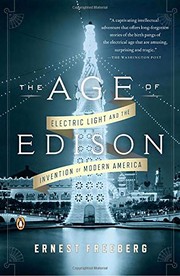
Ernest Freeberg's 2013 cultural history of how electric light transformed American life, using Edison's incandescent bulb as the hinge between the gas-lit 19th century and the electrified 20th. Freeberg covers the installation of the first central stations, the resistance from gas companies, the labor conflicts around the new power systems, and the profound social changes — from factory hours to home life to street safety — that followed from the simple ability to flip a switch and have light.
This book is less about Edison as a person and more about the second-order effects of a technological invention — the social, economic, and cultural changes that the light bulb set in motion. For founders, that is precisely the lesson: the most important impact of a breakthrough is often not the direct effect (people can see at night) but the cascade of changes that follow (factories run 24 hours, cities become safe at night, consumer behavior shifts, real estate values change).
Freeberg's chapter on the war between gas companies and the new electric utilities is also a case study in how incumbents with an inferior technology can fight to delay the inevitable. For a founder trying to displace an established industry, the gas companies' tactics — regulatory capture, FUD campaigns, pricing wars — are all still in use, and understanding them beforehand is cheaper than learning them mid-battle.