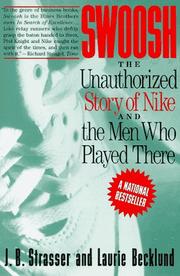
J. B. Strasser (Nike's first advertising manager) and Laurie Becklund's 1993 unauthorised history of Nike's first two decades, built on internal documents and interviews with early employees. It covers the Onitsuka Tiger split, the swoosh design, the waffle sole, and the company's aggressive early marketing culture in more operational and financial detail than Knight's own memoir provides — including the near-bankruptcies that Shoe Dog treats as narrative colour rather than balance-sheet reality.
The shelf note positions this as the outsider account alongside Knight's own memoir: 'Written by Nike's first advertising manager and a Los Angeles Times reporter, this 1993 outsider account covers the Onitsuka split, the swoosh, and Nike's early corporate culture in more operational detail than Shoe Dog does.' For a founder, the complementarity is the point. Knight's memoir is a first-person story about belief and persistence; Swoosh is the third-party ledger, reporting the same events with the numbers attached. The 1971 rupture with Onitsuka — Nike's existential crisis — gets more pages in Swoosh than in Shoe Dog because Strasser was in the room for the advertising decisions that followed. A founder should read both: Shoe Dog for the why, Swoosh for the how much and on what terms.