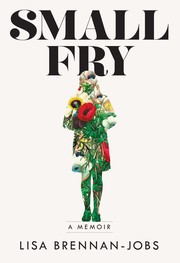
Lisa Brennan-Jobs's memoir about growing up as the daughter whose paternity Steve Jobs denied for years — he took a DNA test only after the state filed a paternity suit, and even then told a reporter that '28 percent of the male population in the United States could be the father.' The Lisa computer was named after her, though Jobs denied that too. The book is not a score-settling exercise; it is a literary memoir that happens to be about a difficult father and a struggling single mother. Brennan-Jobs writes with enough distance to let the reader judge, and the result is the most uncomfortable book on the Jobs shelf — not because it is angry, but because it is fair. She depicts Jobs as a man capable of great warmth and great cruelty, sometimes in the same conversation, and she makes no attempt to reconcile the two. Named one of the ten best books of 2018 by the New York Times and the New Yorker.
Small Fry is not a business book, but it is essential reading for founders who are building high-pressure cultures and have children — or plan to. The book is a case study in what it costs to be the child of someone who treats work as the central fact of existence. Brennan-Jobs captures moments of genuine tenderness (Jobs teaching her to ice skate) alongside moments of casual cruelty (denying her request for financial help with tuition while buying a new Porsche) without resolving the tension. Founders should sit with that ambiguity rather than looking for a lesson they can action.
The most valuable chapter for a founder is Brennan-Jobs's account of living with her father in high school. Jobs was present but not available — physically in the house but mentally somewhere else, often at work. The house was sparsely furnished because Jobs insisted on buying the perfect couch and never found one. The parallel to a startup where the founder is technically 'present' but too distracted to parent is uncomfortable but real.
The book also shows the effects of Jobs's black-and-white thinking on someone who needed him to see shades of grey. When Brennan-Jobs was not perfect, she was sometimes shut out entirely. Founders who expect perfection from employees should read this book and ask whether they are making the same error with their teams, just with less intimate consequences.