- Richard Branson — Listed in Richard Branson's own 'My Top 65 Books To Read In A Lifetime' published on Virgin.com source ↗
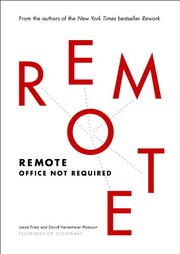
Written years before COVID made remote work mainstream, Jason Fried and David Heinemeier Hansson of 37signals (the company behind Basecamp and Ruby on Rails) argue that the office is not the default way to build a company and that remote work offers advantages most managers never consider. The book covers practical tactics — async communication, managing by output rather than hours, hiring beyond your zip code — and the deeper cultural argument that presence does not equal productivity. It is a founder's polemic against the received wisdom of how work should happen.
Richard Branson included Remote: Office Not Required on his list of 65 books to read in a lifetime, and the book's argument fits his own experience building a geographically distributed empire across the Virgin group. Fried and Hansson challenge the assumption that physical presence is necessary for collaboration, drawing on their own experience running 37signals with a team scattered across time zones. For a founder, the relevant question is not whether remote work is possible — it obviously is — but whether your default assumptions about how work happens are costing you talent, speed, or focus.
The book argues that the office creates an environment optimized for interruption: open-plan layouts, hallway conversations, scheduled meetings that break the day into fragments. Remote work, done well, creates long stretches of uninterrupted time — the kind of time intellectual work actually requires. Fried and Hansson make the case that managers who insist on physical presence are confusing activity with output. For a founder who wants to build a high-quality product, the trade-off is straightforward: more uninterrupted time means better work, and remote eliminates the structural interruptions that office life imposes.
Fried and Hansson also discuss the competitive advantage of hiring from anywhere. A founder who restricts hiring to the commute radius of an office is selecting from a tiny fraction of available talent. Remote opens the global pool. The book's practical advice — write rather than talk, document decisions, measure results not hours — has become conventional wisdom in the post-2020 world, but it was contrarian when the book was published. Founders who read it now will benefit less from the novelty of the argument and more from the tactical discipline it advocates.