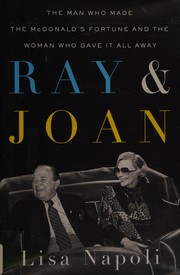
Lisa Napoli's dual biography of Ray Kroc and his wife Joan, published in 2016. The book follows Kroc's rise from milkshake-machine salesman to McDonald's billionaire, then shifts focus to Joan Kroc, who inherited the fortune after Ray's death and gave away most of it — roughly $2 billion — to causes ranging from the Salvation Army to NPR (she funded the largest single gift in NPR's history) to a network of addiction treatment centers. Napoli frames the book as a story in three acts: Ray's building of the fortune, Joan's hidden influence during their marriage, and Joan's extraordinary philanthropy after Ray's death that completely redefined the Kroc name in public memory.
This is not a business book about McDonald's — it is a book about what happens to a fortune after the founder dies, told through the unlikely figure of the woman who inherited it and chose to give it away. The most striking fact in the book is that Joan Kroc, who had spent her marriage overshadowed by Ray's forceful personality, turned out to be the one who decided what the Kroc name would mean in history. Ray built the company; Joan decided the legacy.
For founders, the book raises questions that most business biographies ignore. The money you make will be spent by someone else. The reputation you build will be managed by someone else. Kroc controlled every detail of McDonald's down to the width of the fries; he could not control what his wife did with the fortune after he was gone. Founders who are building wealth should think about who will control it in the end — and whether they have given that person any guidance or any constraints. Joan was a generous and effective philanthropist, but the power was entirely hers.