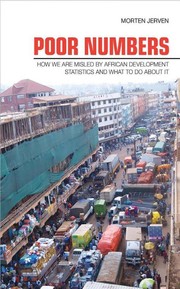
- Bill Gates: "He details his findings in a new book, Poor Numbers: How We Are Misled By African Development Statistics and What To Do About It, which makes a strong case that a lot of GDP measurements we thought were accurate are far from it." source ↗
Morten Jerven's 2013 book, published by Cornell University Press, reveals that most African economic statistics — the GDP figures used by the World Bank, IMF, and aid agencies to allocate billions of dollars — are constructed from sparse, outdated, or inconsistent data. Jerven, a development economist at Simon Fraser University, spent years visiting national statistics offices across sub-Saharan Africa and found surveys conducted years apart, base years that had not been updated in decades, and GDP components estimated rather than measured. The subtitle summarises the argument: How We Are Misled by African Development Statistics and What to Do about It.
"[Jerven] makes a strong case that a lot of GDP measurements we thought were accurate are far from it," Gates writes. The book is a two-hour read (208 pages from an academic press) that will permanently change how you read any claim about a market you have not visited yourself.
For a founder, the book is a tool of measurement skepticism — not cynicism, but the discipline of asking 'how was this number produced?' before building a strategy on top of it. Jerven shows that a single base-year revision (Nigeria's 2014 GDP rebasing added 89% to the country's measured output overnight) can change the investment thesis for an entire continent. The same problem applies to market-size estimates for any data-poor environment: if the underlying survey is five years old and the methodology has not been validated, the number in the McKinsey slide is a fiction dressed as a decimal. Founders launching products in emerging markets, or using macro data to size total addressable markets, should treat Poor Numbers as the standard caution before trusting any official statistic in a low-data setting.