- Richard Branson — Listed in Richard Branson's own 'My Top 65 Books To Read In A Lifetime' published on Virgin.com source ↗
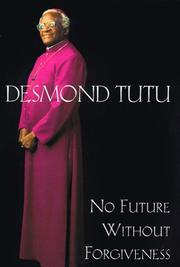
Desmond Tutu, chair of South Africa's Truth and Reconciliation Commission, recounts how the country confronted its apartheid past through public hearings that traded amnesty for truth. The book is both a first-person account of the commission and a moral argument: that acknowledging wrongdoing — confession, not punishment — is the only foundation for rebuilding a fractured society. Tutu draws on Christian theology, Ubuntu philosophy, and the testimonies of thousands of victims and perpetrators to make his case.
Richard Branson included No Future Without Forgiveness on his list of 65 books to read in a lifetime, and while the book's context is a nation grappling with systemic atrocity, its core mechanism applies wherever trust has been broken. Tutu argues that exposing the truth of what happened — fully, without spin — is the precondition for any kind of reconciliation or forward movement. In an organization after a major failure, a product launch that went wrong, or a partnership that collapsed, the instinct is usually to move on quietly. Tutu's argument: silence calcifies the wound; acknowledgment opens the door to rebuilding.
The Truth and Reconciliation Commission traded amnesty for full disclosure. Perpetrators who confessed their crimes publicly and completely were not prosecuted. Founders will recognize this as a high-stakes version of the post-mortem culture that the best engineering teams practice — blameless but ruthlessly honest. Tutu shows that when people are given a safe container to tell the whole truth, they often do, and that the act of being heard is more restorative than any punishment.
Tutu also provides a model for leading through conflict without destroying the organization. He kept the commission functioning amid death threats, political interference, and testimony so harrowing it broke commissioners into tears. His tool was not toughness but a kind of grounded moral clarity — he knew what the commission was for and refused to be distracted. Founders facing internal conflict, a toxic co-founder break-up, or a reputation crisis can take the lesson: define the purpose of the process before you start, then hold everyone to it, including yourself.