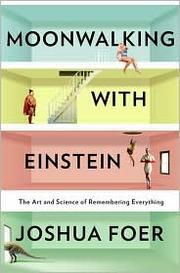
- Bill Gates: "It’s absolutely phenomenal, one of the most interesting books I’ve read this summer." source ↗
Joshua Foer's 2011 book, published by Penguin Press, follows his year-long journey from an ordinary memory to winning the US Memory Championship. Foer, a science journalist, investigates the ancient art of memory — the method of loci, or 'memory palace' — and discovers that extraordinary memory is not a gift but a skill built on spatial mnemonic techniques used by Greek orators and medieval scholars. The book blends competitive memory lore, neuroscience, and the story of the small subculture of mental athletes.
"It's absolutely phenomenal, one of the most interesting books I've read this summer," Gates writes. The book belongs on a founder's shelf as a practical demonstration that cognitive abilities assumed to be innate can be systematically trained. Foer goes from forgetting where he parked to memorising a shuffled deck of cards in under two minutes — not because he is special but because he learned the same mnemonic system that Cicero used to deliver speeches from memory.
For a founder, the implication is hiring-relevant: if memory is a trainable skill rather than a fixed trait, then learning speed is not a matter of IQ but of technique and practice volume. The book also surfaces a useful distinction between semantic memory (facts) and spatial-episodic memory (places and stories), and the insight that most people dramatically underestimate how much their brains are optimised for spatial recall. A founder who understands that the mind has a built-in file system — location-based, story-shaped — can design onboarding, presentations, and documentation to exploit it rather than fight it.