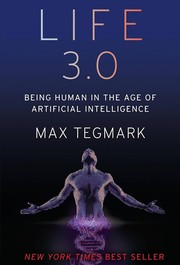
MIT physics professor Max Tegmark's 2017 exploration of the possible futures that artificial superintelligence opens up, from the utopian (abundance, cures for aging, interstellar civilisation) to the catastrophic (human obsolescence, lock-in by a single value system). Tegmark structures the book around the metaphor of Life 1.0 (biological, cannot redesign its own software), 2.0 (cultural, can learn and update), and 3.0 (technological, can redesign both hardware and software), then examines what AI might mean for goals, consciousness, and the distribution of power.
Musk posted this recommendation on X on 29 August 2017: 'Worth reading Life 3.0 by @Tegmark. AI will be the best or worst thing ever for humanity, so let's get it right.' The shelf note reports it was 'Posted 29 August 2017. CNBC independently reported the recommendation.'
For a founder, Tegmark's framework — Life 1.0, 2.0, 3.0 — is a usefully concrete way to think about what happens when a company ships a system that can improve itself faster than its creators can intervene. The book is not an engineering manual; it is a tool for clarifying which AI future you are building toward and what assumptions you are embedding in the reward functions and training data that will outlast your own ability to steer the system. Musk's framing — 'best or worst thing ever' — is the same bet he placed with OpenAI and later xAI, and the book is the most readable single volume on what that bet actually entails.