Founder connections
- Dee HockQuoted passage; full reading not establishedHock names Drexler and the book in his CRUSTTI essay and quotes a passage on molecular machines. He uses it while arguing that changes in information and technology require changes in institutions. This proves use of a passage, not reading of the whole book or a recommendation. His edition is not stated.Source
Summary
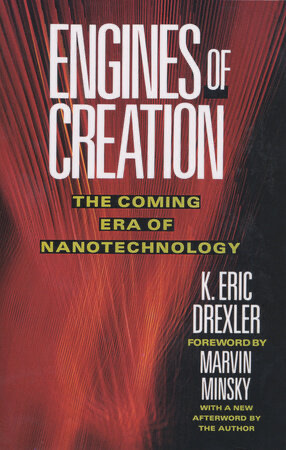
K. Eric Drexler presents a prospective account of molecular technology and the changes it could bring to production and daily life. The book begins with the idea that the arrangement of atoms determines the properties of materials, then considers tools that could build structures at that scale. It connects those possibilities with computing, medicine, manufacturing, the economy and environmental questions. The argument asks readers to consider how powerful new technical abilities might be directed toward human needs. Written before many later developments in the field, it records an early vision of nanotechnology. Its projections should be read as the author’s arguments about possible futures, rather than as a report of completed inventions.
Why read it Our view
Read this as a study of how a proposed technical capability could change a product, its production process and its wider market. Separate what the technology can already do from forecasts, and identify which steps would need evidence before a business could depend on them.