- Jeff Bezos Brad Stone reports Bezos became enamored with Grand's argument that intelligent systems can be built from the bottom up given the right set of primitive building blocks — thinking that fed into the storage and compute services that became S3 and EC2. source ↗
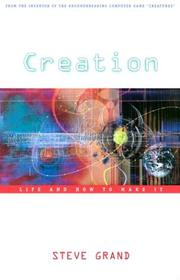
Steve Grand's 2001 exploration of artificial life and the nature of intelligence, written by the computer scientist who created the video game Creatures — one of the earliest virtual ecosystems in which digital organisms learned, reproduced, and evolved without being explicitly programmed. Grand argues that intelligence and life are not properties to be installed but emergent behaviours that arise from simple interacting components, and that building truly intelligent systems means understanding what makes something alive, not just writing better algorithms.
The shelf entry is specific about the role this book played in the creation of AWS: 'Brad Stone reports Bezos became enamored with Grand's argument that intelligent systems can be built from the bottom up given the right set of primitive building blocks — thinking that fed into the storage and compute services that became S3 and EC2.' This is one of the most direct documented connections between a book on a founder's shelf and a specific product decision.
For a founder, Grand's bottom-up thesis is the same architectural argument that underlies cloud computing, microservices, and platform businesses: instead of building one giant integrated system, give customers primitive building blocks (compute, storage, networking) and let them assemble what they need. Bezos read Grand while AWS was taking shape, and the correspondence is visible in AWS's product philosophy — raw components that developers compose rather than finished applications. The book is also a model for how founders should read outside their domain: Grand is a game developer writing about biology, and Bezos took from it an architectural insight that shaped the most profitable business unit in Amazon's history.