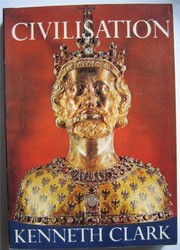
- Paul Graham: "If you read only one book about art history, Civilisation is the one I’d recommend." source ↗
Kenneth Clark's lavishly illustrated companion to his 1969 BBC documentary series, tracing Western European civilisation from the Dark Ages through the 20th century through its art, architecture, philosophy, and music. Clark argues that civilisation is not a birthright but a fragile achievement, maintained by confidence, energy, and a belief in order and reason — and that periods of great art correlate with periods of civic confidence. The book's famous closing line warns that civilisation is 'a ship built of a very thin layer of paint' over barbarism.
Graham names Clark 'the best nonfiction writer I know of, on any subject' in his essay 'Some Heroes.' His recommendation is personal: 'If you read only one book about art history, Civilisation is the one I'd recommend. It's much better than the drab Sears Catalogs of art that undergraduates are forced to buy for Art History 101.' He also puts Civilisation atop his list of the most exciting history books in 'RAQs.'
For a founder, the book's value is not art history trivia but Clark's framework for what makes a civilisation thrive: confidence, energy, and the belief that the world can be understood and improved. Clark's thesis that great work clusters in periods of optimism and collapses when cynicism takes over is directly applicable to company culture. His observation that the most durable institutions were built by people who believed something worth doing could be done, and did it without waiting for permission, describes startup founding as much as cathedral building. The book is also a masterclass in pattern recognition across domains — connecting cathedrals to universities to parliaments as manifestations of the same civilising impulse.