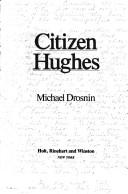
Michael Drosnin's 1985 account of Howard Hughes's secret empire-building during his Las Vegas years, built directly from Hughes's own notes, memos, and correspondence. The book focuses on the period when Hughes, living in reclusive hotel penthouses, used his hidden fortune to buy casinos, politicians, and influence across the American West — a shadow empire built not in boardrooms but from a darkened hotel suite. Drosnin, who gained access to Hughes's private papers, presents a portrait of a man who despite his severe mental illness remained capable of extraordinary strategic calculation and corruption on a scale that still feels shocking.
Citizen Hughes is the most tightly focused of the three major Hughes biographies — it doesn't cover the aviation records, the Hollywood career, or the full life story. It zooms in on one specific phase: the Vegas years, when Hughes was already deep in decline but still operating at a strategic level. For founders, this is a disturbing case study in how institutional power can be wielded from a state of personal collapse. Hughes's Las Vegas operation shows what happens when a founder's empire outgrows its founder's capacity to lead it — the organisation keeps running, but it runs in directions the founder might not have chosen if he were well. It is also a stark reminder that a founder's financial resources can amplify dysfunction on a national scale.