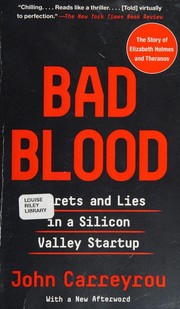
- Bill Gates: "I couldn’t put down this thriller with a tragic ending" source ↗
John Carreyrou's 2018 account of Theranos, built on his Wall Street Journal investigation: Elizabeth Holmes drops out of Stanford at nineteen, raises a $9 billion valuation on a fingerstick blood-testing device that never worked, and holds the company together for over a decade with faked demos, secretly repurposed commercial analyzers, a board of famous statesmen, and legal intimidation — until junior employees Tyler Shultz and Erika Cheung talk, and the reporting brings it down.
"I couldn't put down this thriller with a tragic ending," Gates writes. It is the library's clearest negative case study: not a founder who failed at a real attempt, but a company that never had the thing it sold. The mechanics are the lesson — a board stacked with famous names but no diagnostic expertise, customers signed before the product existed, employees silenced by legal terror, and 'fake it till you make it' applied to human health.
Two details deserve a founder's attention. First, the customers: Walgreens and Safeway signed enormous deals without ever validating the device — momentum and fear of missing out closed what diligence would have killed. Second, the inverted lesson: the company fell because a few junior employees and one reporter refused the consensus — the same non-consensus courage the startup canon celebrates, aimed this time at the founder.