- Bill Gates: "It’s filled with fascinating insights into the architecture of the brain and tantalizing clues about the future of intelligent machines." source ↗
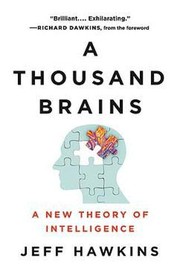
Jeff Hawkins's second book, published by Basic Books in 2021, presents his Thousand Brains Theory of intelligence. Hawkins, who co-founded Palm and Handspring before turning to neuroscience full-time at Numenta, argues that the neocortex is organised into thousands of cortical columns that each model the world independently, and that intelligence emerges from their collective reference-frame voting. The book also explores implications for machine intelligence and existential risk.
Gates placed A Thousand Brains on his 2021 holiday reading list, writing: "It's filled with fascinating insights into the architecture of the brain and tantalizing clues about the future of intelligent machines."
For a founder building in AI, this is the clearest existing articulation of what Hawkins calls the "reference frame" problem — the idea that intelligence is not pattern-matching but the ability to model the world from many perspectives simultaneously. Current deep learning does not do this, and Hawkins argues that is the fundamental gap. Even for founders outside AI, the book's explanation of how prediction and reference frames work offers a vocabulary for thinking about systems that learn and adapt. The second half, on existential threats from machine intelligence, is more speculative and shorter than the neuroscience, but the core theory is the part that matters.