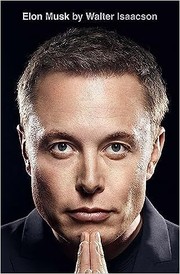
Walter Isaacson's authorized 2023 biography draws on two years of close access — shadowing Musk through Tesla, SpaceX, Neuralink, the Twitter/X acquisition, and the early ChatGPT-driven AI race — to build the fullest account yet of how Musk operates day to day. It traces his difficult childhood in South Africa through his companies' major crises, and pays particular attention to what Isaacson frames as the psychological through-line: a demon-driven intensity that produces both extraordinary output and significant collateral damage to the people around him.
David Senra devoted Founders episode #399, 'How Elon Works,' to distilling this book, reportedly spending 60+ hours rereading it and producing 40 pages of notes to extract Musk's operating principles. The most quoted line Senra pulls from it is Musk's algorithm for engineering and manufacturing: question every requirement, delete any part or process you can, then simplify, then accelerate, and only automate last — a sequence Musk insists on because teams that automate before simplifying just automate the wrong things faster.
Isaacson's central psychological argument — that the same intensity forged by an abusive childhood that makes Musk relentless also makes him difficult, impulsive, and prone to manufacturing crises — is a lesson founders take less as biography and more as a warning: extreme drive is not free of cost, and the same trait that lets someone push through what others consider impossible can also produce chaos that a calmer operator would avoid. The book is candid that Musk's 'surges' — self-imposed emergencies used to force urgency into an organization — work, but at a real human cost to the teams living through them.
The book is also detailed on Musk's demand for direct, unfiltered information flow: his insistence on talking to engineers on the factory floor rather than through management layers, and his impatience with anyone who tells him something is impossible without first trying it themselves. For founders, this is presented as a specific, repeatable operating habit — proximity to the actual work — rather than a personality quirk.