- Phil Knight: "In the beginner’s mind there are many possibilities, but in the expert’s mind there are few." source ↗
- Steve Jobs Suzuki’s lectures were part of the Buddhist study Jobs took up after returning from India in 1974; he then found Suzuki’s disciple Kōbun Chino Otogawa running a zendo in Los Altos and, as he told Isaacson, ‘Zen has been a deep influence in my life ever since.’ source ↗
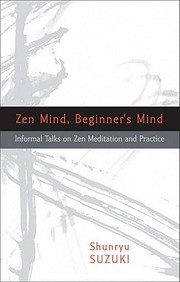
Zen Mind, Beginner's Mind (1970) collects talks given by Shunryu Suzuki, the Japanese Soto Zen priest who founded the San Francisco Zen Center, to his American students. Organized around the ideas of "correct practice," "correct attitude," and "correct understanding," it presents Zen not as a body of doctrine to master but as a way of approaching each moment, and each task, without the accumulated assumptions of expertise. Its central phrase — "in the beginner's mind there are many possibilities, but in the expert's mind there are few" — has made it one of the most quoted books on mindfulness and practice in the West.
The book's core idea — shoshin, or beginner's mind — is a direct antidote to the trap experienced operators fall into: pattern-matching a new problem onto an old one and missing what's actually different about it. For a founder, that shows up constantly, in a market that looks like the last one, a customer who seems like the last customer, a hire who resembles a past success. Suzuki's insistence on staying open to "many possibilities" is really an argument against the overconfidence that accumulated experience quietly builds in successful people.
The book's second major thread — that Zen practice is about the doing itself, not a future state to be achieved — reframes the founder's relationship to daily work. Rather than treating each day as a means to an eventual outcome (product-market fit, an exit, scale), it argues for full attention to the present task as the actual point, which in practice looks like less distraction, less anxious forecasting, and more precision in execution. It is a book several long-time operators and investors (including in Silicon Valley circles going back to the personal-computing era) have cited as core reading precisely because it functions as a check on ego and certainty rather than a source of new tactics.