- David Senra — Covered on Founders episode #191 (2021). source ↗
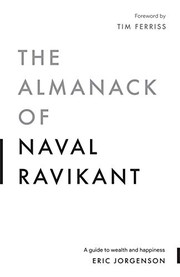
The Almanack of Naval Ravikant, compiled by Eric Jorgenson, distills a decade of entrepreneur and angel investor Naval Ravikant's tweets, essays, and podcast interviews into a single reference on building wealth and cultivating happiness. It is organized in two halves — "Wealth" and "Happiness" — presenting Ravikant's aphoristic thinking on leverage, specific knowledge, and the psychology of contentment.
For founders, the wealth half is the more directly operational section: Naval's argument is that wealth is created by building or owning equity in a scalable business, not by trading time for money, and that the modern founder's edge comes from combining specific knowledge (skills that can't be easily trained or outsourced, usually built through genuine curiosity), accountability (putting your own name and reputation on the outcome), and leverage — code and media being the two forms of permissionless leverage available to anyone today, since they can scale a founder's judgment to millions of people without needing anyone's approval or added headcount.
Naval's related idea that founders should "seek wealth, not money or status" reframes the goal: money is a claim on other people's time and effort, wealth is assets that earn while you sleep, and status is a zero-sum game that has nothing to do with building anything. He also stresses that the person with the most specific knowledge and highest-leverage tools, playing long-term games with long-term people, tends to compound past everyone chasing shorter-term wins — a direct argument for founders to optimize for equity, reputation, and compounding leverage rather than salary or immediate recognition.
The happiness half matters to founders precisely because building a company is a long, high-stress game: Naval's core claim that happiness is a skill and a default state you return to (rather than a destination you arrive at through more achievement) is presented as a countermeasure to the founder trap of believing the next milestone — funding round, acquisition, exit — will finally deliver contentment. His practice of treating desire as a "contract you make with yourself to be unhappy until you get what you want" is offered as a direct tool for founders trying to sustain motivation without burning out chasing an ever-receding goalpost.