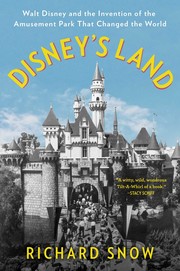
Richard Snow's narrative history recounts how Walt Disney conceived and built Disneyland on 240 acres of Anaheim farmland in the early 1950s, despite near-universal skepticism from bankers, his brother Roy, and even his own wife. It follows the scramble to finance the park, the assembly of a team with no theme-park experience, the frantic year-and-a-day construction sprint, and the chaotic, near-disastrous opening day on July 17, 1955, through to the park's eventual status as a cultural institution.
David Senra covered this book on Founders podcast episode #158 (and revisited it in #346/#347), framing Disney as the archetype of the founder who bets everything on a vision nobody else can see. Disney financed the park by borrowing against his own life insurance policy after banks, his brother, and his wife all told him it would fail — amusement parks were considered a disreputable, dying business. Senra's takeaway: obsessive, watchmaker-level perfectionism paired with total personal financial exposure is often what separates a category-defining product from an ordinary one.
Because nothing like Disneyland had been built before, there was no established process to follow. Disney assembled animators, engineers, and architects who had never designed a theme park and had them invent the discipline (later called "Imagineering") as they went — a reminder that founders entering genuinely new territory should expect to build the playbook rather than find one. Senra also highlights Disney's bricklayer parable — one worker sees himself laying bricks, another sees himself building a cathedral — as a lens for how purpose changes the quality of execution.
Finally, Disney's insistence that "Disneyland will never be finished... it will continue to grow" reframes the goal of company-building: not shipping a finished product, but creating a living organization capable of continuous reinvention. Opening day itself was a near-disaster — extreme heat, a gas leak, counterfeit tickets, massive overcrowding — yet the long-term outcome vindicated the vision, a useful corrective for founders who treat an early stumble as a verdict.