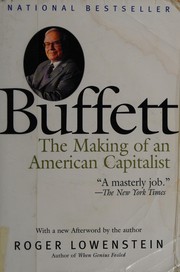
Roger Lowenstein's 1995 biography, the first major book written about Warren Buffett, traces his rise from a boyhood fascination with numbers in Omaha through the Buffett Partnership years to his transformation of a failing textile mill, Berkshire Hathaway, into a diversified investment conglomerate. Drawing on interviews with Buffett's family, friends, and business partners, Lowenstein focuses closely on the investment decisions and philosophy — rooted in Benjamin Graham's value investing — that built Buffett's fortune and reputation as the 'Oracle of Omaha.'
Lowenstein's book is prized by operators and investors precisely because it stays closer to the mechanics of capital allocation than Schroeder's later, more personal Snowball. For founders, the core lesson is Buffett's discipline around buying businesses (or stock in businesses) with a durable competitive advantage at a price that leaves a margin of safety — and then having the patience to do almost nothing for years at a time. David Senra's Founders podcast returns repeatedly to the idea, well documented in Lowenstein, that Buffett's advantage was temperament more than intellect: an ability to sit still, ignore market noise, and make concentrated bets only when the odds were overwhelmingly favorable.
The book is also useful as a case study in turning around a dying business. Berkshire Hathaway itself was a failing textile manufacturer when Buffett took control in 1962 — he later called the acquisition one of his biggest mistakes, but the lesson founders should draw is different: Buffett's real skill was recognizing that Berkshire's shell (its cash flow and shareholder structure) could be redirected into fundamentally better businesses, rather than sinking more capital into a failing operation. Founders facing a struggling core business can learn from his willingness to reallocate capital ruthlessly rather than defend a sunk cost.
Lowenstein also documents how Buffett built his network of managers and partners — buying companies and then leaving talented operators alone to run them. For founders scaling past their own personal capacity, this is a directly applicable model of delegation built on trust and minimal interference.