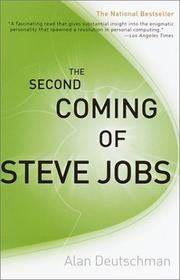
Alan Deutschman's unauthorized biography, first published in 2000, chronicles Steve Jobs's twelve-year exile from Apple after his 1985 ouster: his troubled tenure running NeXT, his unexpected reinvention as a Hollywood mogul through Pixar's rise, and his eventual return to a near-bankrupt Apple in 1997 as interim CEO. Drawing on interviews with former colleagues, the book portrays Jobs's volatile, demanding leadership style alongside the strategic decisions — product-line simplification, the Microsoft deal, the iMac — that engineered one of the most dramatic corporate turnarounds in business history, ending around the iMac's 1998 launch.
This book is essentially a case study in founder failure and reinvention rather than a straight success story, which is what makes it useful to founders. Jobs's company NeXT was, by most measures, a commercial failure — expensive hardware nobody wanted, a factory built for 10,000 machines a month producing 400, and repeated refusals of buyout offers that would have saved the business if he'd been willing to abandon his vision of an integrated hardware-software product. The founder lesson Deutschman draws out is that Jobs's stubbornness looked like a fatal flaw for years, right up until the moment NeXT's software became the exact thing Apple desperately needed to buy its way back into relevance.
The book also shows how Pixar, treated by Jobs as a secondary "hobby" investment for most of a decade, ended up being the vehicle of his comeback — he let John Lasseter's team operate with real autonomy (unlike his micromanagement at NeXT), and that hands-off trust in people who were "already adults" is presented as a hard-won lesson from his first, chastened stint as a founder. Founders can take from this that betting years of capital and reputation on a long, unprofitable bet can pay off unpredictably, but only if the founder is honest about which of his instincts to control tightly and which to delegate.
Finally, the return to Apple itself is a tactical playbook: Jobs's brutal simplification of a bloated product line down to four products, his willingness to publicly partner with a hated rival (Microsoft) to shore up finances and credibility, and his instinct to bet the company's turnaround on a single, radically designed product (the iMac) rather than a broad portfolio. The book doesn't sand down the costs of this style — public humiliation of employees and a reputation for cruelty are documented alongside the wins — making it a more unvarnished companion to Jobs's more heroic origin-story biographies.