- Jeff Bezos: "I just spent 10 hours living an alternate life and I learned something about life and about regret." source ↗
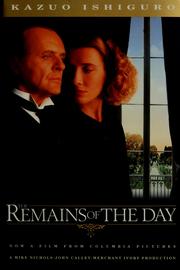
Kazuo Ishiguro's 1989 Booker Prize-winning novel is narrated by Stevens, an aging English butler who takes a road trip through the West Country in 1956 and, along the way, reconstructs his decades of service to Lord Darlington at Darlington Hall between the two world wars. Through Stevens's carefully controlled, self-justifying recollections, the novel reveals his suppressed love for the former housekeeper Miss Kenton and his unwavering loyalty to an employer who was, in fact, a Nazi sympathizer and political naif. By the end of the trip, Stevens is forced to confront how much of his life he sacrificed to an ideal of professional "dignity" that left no room for personal judgment or feeling.
The Remains of the Day is not a business book, but it is one of the sharpest studies available of what happens when someone subordinates their own judgment entirely to an organization and a leader. Stevens defines his own worth by the quality of his service, never by whether the cause he serves is worth serving — he watches Lord Darlington get outmaneuvered by the Nazis and host antisemitic dinner guests, and rationalizes all of it as "not his place" to question. For founders and early employees alike, it's a warning about the cost of building a culture where loyalty and execution are prized above independent judgment: a team that will not tell the founder they're wrong is a team steering the company off a cliff in polished English.
Stevens's obsession with "dignity" — an unflappable, professional composure he maintains even while his father is dying down the hall — is also a case study in the false economy of suppressing emotion and personal life for the sake of a role. He mistakes emotional numbness for professionalism, and by the time he recognizes what he gave up with Miss Kenton, it's too late to reclaim it. Founders who valorize hustle and total devotion to the company can read this as a cautionary tale about a life so thoroughly subordinated to a title that nothing of the person is left when the title stops mattering.
Finally, the novel's structure — an unreliable narrator slowly revealing, despite himself, the gap between the story he tells and what actually happened — is a useful mirror for founders who spend a lot of energy managing their own narrative. Stevens's polished self-account only makes his self-deception more visible; it's a reminder that the stories founders tell themselves about their choices deserve the same scrutiny they'd apply to a competitor's pitch deck.