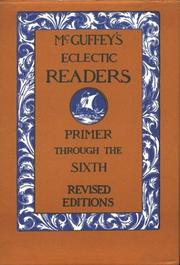
- Henry Ford Ford was among the last generation of children educated on the McGuffey Readers; as an adult he collected 468 copies across 145 editions to preserve them. source ↗
First compiled by educator William Holmes McGuffey starting in 1836, the McGuffey's Eclectic Readers were a graded series of six schoolbooks used to teach reading, morality, and civic values to generations of American schoolchildren. Called 'eclectic' because they drew stories, poems, and speeches from a wide range of sources — scripture, Shakespeare, Dickens, Jefferson, and original moral tales — the readers progressed from simple lessons for beginners to advanced literary and rhetorical excerpts for older students. Between 1836 and 1960, an estimated 120 million copies were sold, making them one of the most widely used textbook series in American history, second only to the Bible in influence on 19th-century American values.
This isn't a business book, but David Senra has pointed to McGuffey's Readers as the shared cultural water that many of history's most driven founders — Henry Ford, Andrew Carnegie, and the Wright brothers among them — were raised on. The readers weren't neutral; they were explicitly designed to instill diligence, self-reliance, honesty, thrift, and perseverance as moral virtues, repeated relentlessly across hundreds of short lessons. For founders, the interesting takeaway isn't any single lesson in the book but the mechanism: these men absorbed a specific, coherent worldview about work and character before they ever built anything, and that early operating system shaped decades of later decisions.
The practical lesson for founders raising children, building teams, or shaping culture is in the method itself — McGuffey didn't lecture abstractly, he taught character through short, concrete, memorable stories repeated at scale. Founders trying to instill values in an organization can take from this the idea that culture is transmitted through repeated, specific narratives, not mission statements — a technique closely related to how Senra himself uses biography and story on Founders podcast to transmit the same kind of operating principles to modern builders.