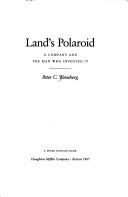
Peter C. Wensberg, who worked directly under Edwin Land for 24 years as a Polaroid executive, tells the story of the company and its founder from the inside. The book traces Land's path from a self-taught polarized-light obsessive who dropped out of Harvard to the creation of instant photography, the company's secretive work on U-2 spy-plane optics for the U.S. government, the triumph of the SX-70 camera, and the slow unraveling that followed the disastrous Polavision instant-movie launch, which ultimately cost Land control of the company he founded.
David Senra covered this book on Founders podcast episode #263, framing Land as the single biggest influence on Steve Jobs's own thinking about business — Jobs called Land his hero and explicitly modeled Apple's obsession with standing at 'the intersection of humanities and sciences' on him. Because Wensberg wrote from inside the company rather than from a distance, the book gives founders an unusually close view of what obsessive, uncompromising product standards look like day to day, not just in retrospect.
Land's operating philosophy, distilled in his own words, was that 'if anything is worth doing, it's worth doing to excess' — he would rebuild an entire product line rather than ship something short of his internal bar, and he treated Polaroid's chemists and engineers as an extension of his own perfectionism. For founders, the takeaway is that category-defining products rarely come from balancing tradeoffs; they come from a founder who refuses to accept the compromises everyone else assumes are necessary.
The book is also a cautionary tale founders shouldn't skip past: Land's failure to admit Polavision wasn't working, and his refusal to cede any ground to a board losing confidence in him, is what finally got him pushed out of Polaroid in 1980 after 43 years running it. It's the same arc Jobs would later live through at Apple — a founder's greatest strength (uncompromising conviction) becoming the thing that costs him control of his own company when he can't see a failure clearly enough to change course.