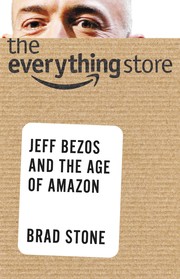
Brad Stone's 2013 biography traces Amazon's evolution from Jeff Bezos's 1994 garage startup selling books online into a dominant e-commerce and cloud-computing giant, drawing on interviews with hundreds of current and former employees, Bezos's family, and Bezos himself. Stone chronicles the founding decisions behind Amazon's relentless customer focus, its brutal internal culture and famously demanding leadership principles, near-death moments during the dot-com crash, and expansion battles into categories from books to everything, along with the launches of AWS and Kindle. The book portrays Bezos as a visionary of rare intensity — intellectually rigorous, often personally difficult, and willing to sustain years of losses in pursuit of long-term dominance.
David Senra has covered The Everything Store multiple times on Founders podcast (including episode #179, the first of a three-part Bezos series), consistently returning to Bezos's willingness to be misunderstood and to sacrifice near-term profit for long-term market position. Stone documents how Bezos plowed Amazon's earnings back into growth for over a decade while Wall Street repeatedly questioned whether the company would ever turn a real profit — the founder lesson Senra draws is that conviction in a long time horizon, defended stubbornly against short-term critics, is what let Amazon out-invest and out-last competitors like Borders and Circuit City who optimized for quarterly numbers.
The book is equally instructive on process and culture: Bezos's insistence on the 'single-threaded owner' structure, the banning of PowerPoint in favor of narrative memos, and the relentless 'customer obsession' principle codified into Amazon's leadership principles are all concrete mechanisms founders can study and adapt, not just abstract values. Stone also doesn't flinch from the cost of this intensity — brutal internal debate, high turnover, and a culture some found nearly unbearable — which founders should read as a real trade-off of the model, not an incidental detail.
Finally, Stone's account of Amazon's near-collapse during the dot-com crash, when Bezos had to restructure debt and cut costs while maintaining the long-term vision publicly, is a case study in founder resilience under existential pressure — holding the line on strategy while making painful short-term concessions to survive.