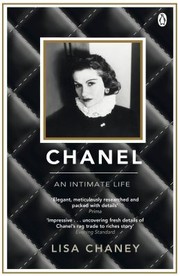
Lisa Chaney's biography traces Gabrielle 'Coco' Chanel's journey from an impoverished, abandoned child raised by nuns in a convent orphanage to the founder of one of fashion's most enduring empires. Drawing on newly uncovered letters and records that Chanel spent much of her life trying to suppress, Chaney follows her path from milliner to couturier, her formative love affairs with wealthy men who bankrolled her early ventures, and her invention of a stripped-down, modern style built on jersey fabric, the little black dress, and Chanel No. 5. The book does not shy from the darker chapters, including Chanel's wartime affair with a German intelligence officer and the persistent questions about her conduct during the Nazi occupation of Paris.
David Senra hasn't covered this particular Chaney biography on Founders, but he has returned to Chanel's life twice using other books (episode #64, 'Coco Chanel: Her Life, Her Secrets,' and episode #199, 'Coco Chanel: The Legend and the Life'), and the founder lessons he draws out map directly onto what Chaney documents here. The throughline Senra emphasizes is editing: Chanel built her reputation by stripping away ornamentation rather than adding it, famously saying 'what you have to do is cut,' and Chaney shows her reworking a single suit dozens of times in her studio until every unnecessary detail was gone. For founders, the lesson is that differentiation often comes from ruthless subtraction, not from piling on features.
Chaney's account is also useful for showing how Chanel actually started: not with a fashion house, but with a small hat shop, customizing pieces she bought from a department store before she ever designed clothing. That mirrors a pattern Senra points to across many founders — start by improving something that already exists in a small, controllable way, then expand once you understand the customer. Chanel's early backers, Étienne Balsan and especially Arthur 'Boy' Capel, supplied the capital that let her leave dependence behind; the book makes clear she treated that seed money as a stepping stone to full ownership and control of her own business, not as a permanent arrangement.
Finally, Chaney's biography is a sober reminder that founders construct their own myths, and that the myth and the record can diverge. Chanel spent decades obscuring her orphanage childhood and her wartime associations to protect a carefully built image of self-invention. Founders studying her should separate the operational lessons — aggression, editing, taste, control — from the mythology she built around herself, and recognize that a founder's polished narrative is itself a deliberate business asset, not necessarily the whole truth.