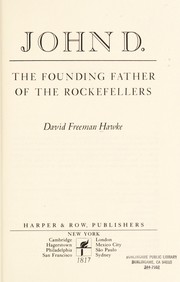
David Freeman Hawke's biography traces John D. Rockefeller's rise from a bookkeeping clerk in Cleveland to the founder of Standard Oil, the company that came to dominate the American oil industry before its court-ordered breakup in 1911. Drawing on Rockefeller family scrapbooks, Hawke examines the discipline, religious conviction, and calculating business methods that built an unprecedented fortune, while also probing why Rockefeller became one of the most reviled men of his era despite viewing himself as scrupulously honest. The book covers his early ventures, the creation and consolidation of Standard Oil, and the ruthless tactics used to eliminate competitors.
David Senra covered this book on Founders podcast episode #254, and frames Rockefeller as the ultimate case study in obsessive focus and long-term thinking applied to a single industry for decades. The founder takeaway Senra emphasizes repeatedly is that Rockefeller treated cost-cutting and efficiency as a competitive weapon from his very first ledger job — he was tracking fractions of a cent per barrel before Standard Oil was even an idea, and that habit of relentless measurement never left him. For founders, the lesson is that operational discipline built early, before you have scale, compounds into an insurmountable advantage later.
The book also shows Rockefeller's preference for silence and surprise as a competitive strategy — he rarely explained his moves publicly, which let him consolidate control of the oil industry while rivals were still debating what he was doing. Founders can take from this that talking too much about your strategy in public gives competitors a map of what to defend against; secrecy and patience were core to how Rockefeller out-executed people who were arguably smarter or better connected.
Finally, Hawke's account underscores Rockefeller's willingness to absorb short-term reputational and even legal risk in service of a long-term vision of industry consolidation. He didn't optimize for being liked — he optimized for building a durable, efficient system, and let history judge the ethics later. Founders building anything that threatens incumbents should read this as a study in playing a genuinely long game rather than seeking approval at each step.