- Marc Andreessen: "on why even environmentalists should be pro building, pro cities, pro nuclear, and pro genetic engineering." source ↗
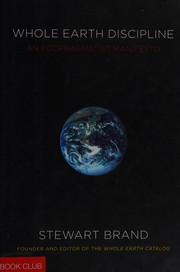
Stewart Brand's 2009 book argues that environmentalism must embrace the tools it has historically opposed — nuclear power, genetic engineering, urbanization, and geoengineering — to actually solve environmental problems. Brand, founder of the Whole Earth Catalog, draws on decades of ecological observation and the Long Now Foundation's long-term thinking framework to argue that the environmental movement's romantic anti-technology stance is self-defeating. The book is a pragmatic manifesto for a techno-environmentalism that measures outcomes rather than intentions.
Andreessen lists it in his "It's Time to Build" companion-book thread as being "on why even environmentalists should be pro building, pro cities, pro nuclear, and pro genetic engineering." The connection to Andreessen's "It's Time to Build" essay is explicit: the enemy is the same, the anti-development stance that blocks everything.
For a founder, Brand's argument is the most sophisticated version of a thesis every builder must internalize: the people who say "no" always have better arguments in the short term, and the costs of inaction are invisible. Brand shows that environmentalists' opposition to nuclear power and GMOs, motivated by ideological purity, produced objectively worse environmental outcomes — more coal burned, more land tilled, more species endangered — than the technologies they blocked would have caused. The pattern repeats across every regulated industry: the permitting and opposition process is structurally biased toward delay because the costs of delay are diffuse and the benefits are concentrated on the few passionate about stopping things. For a founder navigating regulation, permitting, or any domain where incumbents can slow things down, Brand's framework for measuring outcomes rather than intentions is the essential counterargument.