- Marc Andreessen: "The median American is a moderate national socialist – statist to the core on both economic and social policy. Given public opinion, the policies of First World democracies are surprisingly libertarian." source ↗
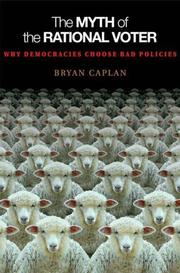
Bryan Caplan's 2007 book challenges the foundational assumption of democratic theory — that voters are rational. Drawing on public choice economics and cognitive psychology, Caplan argues that voters are "rationally irrational": because a single vote has virtually no chance of changing an election outcome, voters have no incentive to hold correct beliefs about politics. Instead they indulge four systematic biases — anti-market, anti-foreign, make-work, and pessimistic — producing predictable errors in public opinion. Democratic policies end up more market-friendly than the median voter wants because elite and institutional forces push against popular irrationality.
Andreessen's summary cuts straight to the point: "The median American is a moderate national socialist — statist to the core on both economic and social policy. Given public opinion, the policies of First World democracies are surprisingly libertarian." For a founder, this book is the most practical guide to understanding why good innovation policies are politically hard to enact and why bad policies survive.
Caplan's four biases are a diagnostic for every policy conversation a founder will encounter. Anti-market bias: people distrust profit and assume markets exploit consumers, even when competition drives prices down. Anti-foreign bias: people prefer domestic solutions even when foreign options are better and cheaper. Make-work bias: people believe labor-saving technology destroys jobs, ignoring that it creates new ones. Pessimistic bias: people believe the economy is getting worse even when objective measures improve. A founder who understands these biases can anticipate political reactions to their business — the techlash, regulatory backlash against gig platforms, public resistance to automation — and respond to the actual emotional driver rather than the stated policy objection. The book teaches that voters are not stupid; they are rationally irrational, and founders who accept that reality can navigate it far better than those who expect rationality.