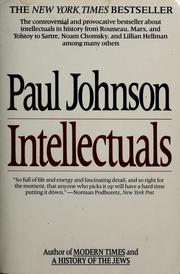
- Marc Andreessen: "Two books on the nature of the public intellectuals who lead our society." source ↗
Paul Johnson's Intellectuals (1988) examines the private lives of canonical Western thinkers — from Rousseau and Shelley through Marx, Tolstoy, and Sartre — to argue that their personal hypocrisy discredits their public ideas. Johnson, a British historian and journalist who edited the New Statesman before moving rightward over a long career, writes in the tradition of the anti-totalitarian liberal who sees intellectuals as a dangerous class when their ideas escape the seminar room. The book is a series of biographical exposes designed to show that those who claim moral authority to lead society often cannot manage their own households.
Andreessen grouped this with Sowell's Intellectuals and Society as "Two books on the nature of the public intellectuals who lead our society." For a founder, Johnson's book is a defense against intellectual authority — the reflex to defer to credentialed thinkers who have never built anything. Johnson demonstrates methodically that many thinkers whose ideas shape policy and culture lived lives of systematic hypocrisy: Rousseau abandoned his children to orphanages while writing about education; Marx could not manage his own finances while theorizing about economic organization.
The practical lesson is intellectual independence. Founders operate in a world where conventional wisdom — often propagated by people Johnson would include among his subjects — tells them what is impossible, unethical, or impractical. Johnson provides the historical ammunition to disregard that authority: if the people who produced the ideas could not or would not live by them, the ideas themselves deserve rigorous scrutiny. A founder who can distinguish between the prestige of an idea's source and the validity of the idea itself holds a durable competitive advantage over competitors who cannot.