- Marc Andreessen: "'How to get along with people, how to deal with violence, how to adjust to losing someone you love—All versions of a bigger question: How do you live?'" source ↗
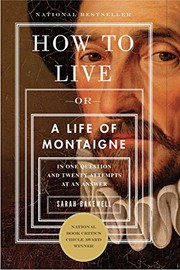
Sarah Bakewell's 2010 biography of Michel de Montaigne, the 16th-century French essayist who invented the personal essay as a literary form. The book is organized around 21 answers to the question 'how to live' — drawn from Montaigne's own essays — covering friendship, distraction, solitude, death, and the art of being ordinary. Bakewell draws on Montaigne's Essays and the political chaos of the French Wars of Religion to reconstruct a thinker who treated his own mind as the subject of study and made self-knowledge a method.
Montaigne is the patron philosopher of founders who distrust certainty. His core method — 'I do not know; I examine' — is the operating system of the scientific mindset and the startup mindset alike. He invented a form (the essay, literally 'an attempt') built for incomplete answers: provisional, personal, iterative. That is the same structure as a pitch deck, a post-mortem, or a product roadmap.
The book's lessons are not abstract. Montaigne's essay 'On Experience' argues that knowledge comes from doing, not from reading principles — the same argument every founder makes when they choose to build instead of plan. His advice on friendship (invest in people who tell you the truth), on focus (the mind wanders, pull it back), and on death (keep it in mind so it does not surprise you) are operational, not aspirational. A founder reading Montaigne is learning how to think in a profession where thinking in public is the job.