- Marc Andreessen: "Best (?) walk through the ancient/current philosophy of Stoicism. You can't control other people but you can control yourself, so do that." source ↗
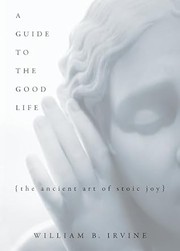
William B. Irvine's A Guide to the Good Life (2008) is a modern introduction and practical manual to Stoic philosophy, adapted from the works of Epictetus, Seneca, and Marcus Aurelius. Irvine, a professor of philosophy at Wright State University, distills Stoic practices — negative visualization, voluntary discomfort, the trichotomy of control — into a contemporary self-help framework for anyone seeking tranquility without religious commitment. The book presents Stoicism not as an academic relic but as a coherent, trainable answer to how to live.
Andreessen called it the "Best (?) walk through the ancient/current philosophy of Stoicism. You can't control other people but you can control yourself, so do that." The parenthetical question mark is important — Irvine's book is a presentation rather than original philosophy, and its value to a founder is precisely that it is an actionable handbook rather than a scholarly treatise. The startup environment is a machine for generating uncontrollable outcomes (market shifts, competitor moves, investor moods, regulatory surprises), and Stoicism is a system for not letting those outcomes dictate your next decision or your emotional baseline.
The trichotomy of control — things you control fully, things you control partially, things you control not at all — maps directly onto the founder's daily triage problem. Irvine's practical exercises (negative visualization, premeditatio malorum, voluntary discomfort) are not lifestyle decoration; they are training regimens for the emotional resilience required to sustain long odds. Andreessen's terse summary — "You can't control other people but you can control yourself, so do that" — distills the entire book into a sentence a founder can tape to a monitor: stop trying to control what you cannot, and take full ownership of what you can.